

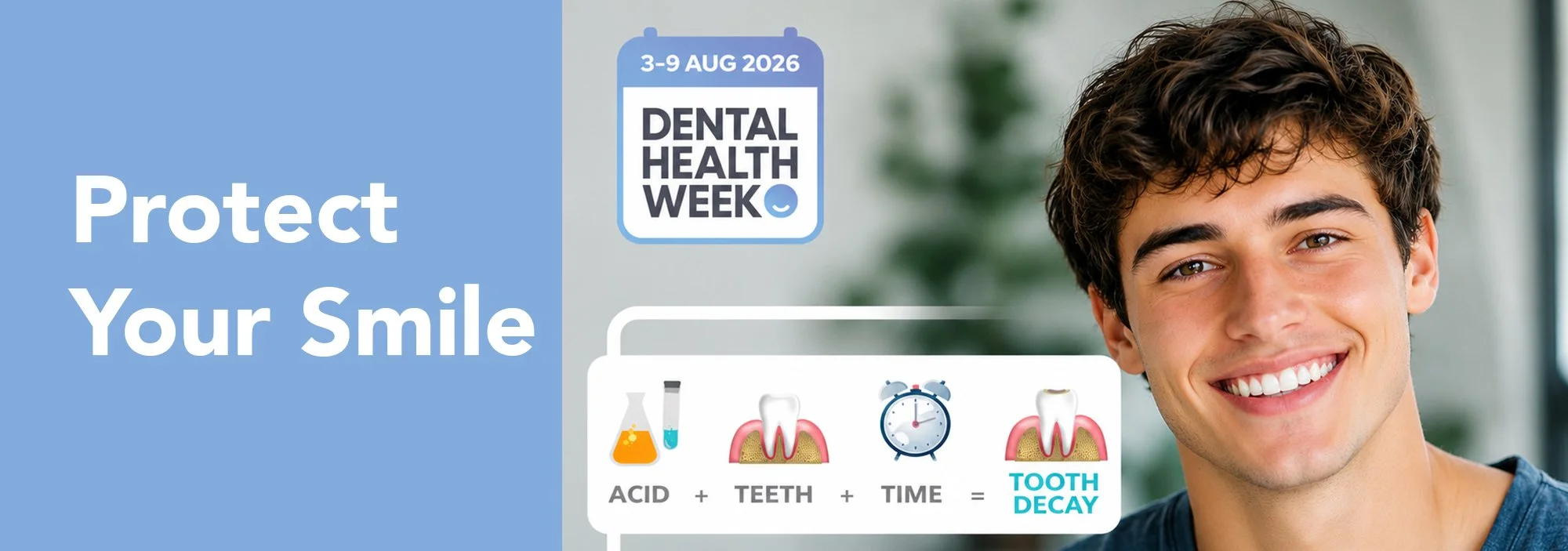
Tooth Decay Doesn't Happen Overnight: Small Habits Today, Healthier Smiles Tomorrow
Dental Health Week 2026 | My Smile Campaign
Most people don't wake up one morning with a cavity.
Tooth decay develops gradually over time, often without causing any pain until it has progressed significantly.
That's why many young adults are surprised when their dentist tells them they have decay—even if their teeth have felt completely normal.
This Dental Health Week, the Australian Dental Association's My Smile campaign is reminding young Australians aged 18–25 that preventing tooth decay is much easier, less invasive and more affordable than treating it later.
The good news? Understanding how tooth decay develops gives you the power to stop it before it starts.
What Is Tooth Decay?
Your mouth naturally contains millions of bacteria.
Most are harmless, but some feed on the sugars found in foods and drinks.
As these bacteria digest sugar, they produce acids.
These acids attack the hard outer surface of your teeth, known as enamel.
Over time, repeated acid attacks begin removing important minerals from the tooth surface.
If this process continues, the enamel weakens and eventually a cavity (or hole) develops.
Without treatment, decay continues to spread deeper into the tooth, where it can affect the nerve and may require more extensive dental treatment.
Why Sugar Is the Biggest Culprit
Sugar isn't harmful simply because it's sweet.
The real problem is that sugar provides food for the bacteria in your mouth.
Every sugary snack or drink gives those bacteria another opportunity to produce acid.
It's not only obvious treats like chocolate and lollies that contribute.
Hidden sugars can also be found in:
Soft drinks
Sports drinks
Energy drinks
Flavoured milk
Fruit juice
Sweetened coffee drinks
Many processed snack foods
The more often your teeth are exposed to sugar, the more frequently acid attacks occur.
It's Not Just How Much Sugar You Eat
Many people think avoiding large amounts of sugar is enough.
In reality, how often you consume sugary foods and drinks is just as important.
For example:
Having one dessert after dinner is generally kinder to your teeth than sipping a soft drink throughout the afternoon.
Every time you consume sugar, your mouth experiences another acid attack.
Frequent snacking means your teeth have less time to recover between attacks.
Giving your mouth time to neutralise acids is an important part of protecting your enamel.
Understanding Tooth Erosion
Tooth decay and tooth erosion are different problems, although they often occur together.
Tooth erosion happens when acids directly dissolve the tooth surface.
Unlike tooth decay, which involves bacteria feeding on sugar, erosion occurs when acidic foods and drinks repeatedly come into contact with your teeth.
Common sources include:
Sports drinks
Soft drinks
Energy drinks
Fruit juices
Citrus fruits
Over time, erosion can thin enamel, increase tooth sensitivity and change the appearance of your smile.
Once enamel is lost, it cannot grow back.
How to Reduce Your Risk
Fortunately, protecting your teeth doesn't require complicated routines.
Small daily habits make the biggest difference.
Brush Twice Every Day
Brush morning and night using fluoride toothpaste.
Fluoride strengthens enamel and helps repair early stages of mineral loss before cavities develop.
Clean Between Your Teeth
Floss or use interdental brushes every day.
Removing plaque between your teeth reduces the build-up of harmful bacteria in areas your toothbrush can't reach.
Drink More Water
Water remains the best drink for your oral health.
It helps wash away food particles, supports healthy saliva production and contains no sugar.
If you enjoy sports drinks or soft drinks occasionally, have a drink of water afterwards.
Don't Sip Sugary Drinks All Day
Constant sipping exposes your teeth to repeated acid attacks.
If you're going to enjoy a sugary or acidic drink, it's generally better to consume it in one sitting rather than over several hours.
Wait Before Brushing
After consuming acidic foods or drinks, your enamel becomes temporarily softer.
Wait around 30 minutes before brushing to allow your saliva time to protect and strengthen the tooth surface.
Visit Your Dentist Regularly
One of the best ways to prevent tooth decay is through regular dental examinations.
Your dentist can detect early signs of decay before they become painful or require larger fillings or more complex treatment.
Why Prevention Saves You Money
Many young adults delay dental visits because they think they're saving money.
Unfortunately, untreated decay usually becomes more expensive over time.
A small cavity may only require a simple filling.
Left untreated, that same tooth could eventually require:
A larger filling
Root canal treatment
A crown
Tooth extraction
Preventative care is almost always simpler, quicker and more affordable than treating advanced disease.
Your Smile Is Worth Protecting
Life between 18 and 25 is busy.
Study, work, sport, social events and managing everyday expenses often take priority.
But your oral health deserves a place on that list too.
Simple habits today can help protect your smile for decades to come.
That's exactly what the My Smile campaign is all about—helping young Australians build healthy habits before problems develop.
Keep Your Smile Healthy for Life
Tooth decay doesn't happen overnight.
It develops slowly, often without obvious warning signs.
By brushing twice a day, choosing water more often, reducing frequent sugary snacks and visiting your dentist regularly, you can greatly reduce your risk of tooth decay and tooth erosion.
Book Your Preventative Dental Check-Up
The best time to treat tooth decay is before it starts.
Whether it's been six months or several years since your last dental visit, our friendly team is here to help you protect your smile with personalised advice, preventative care and regular dental examinations.
Because a healthy smile is something worth investing in—today and for the future.
